
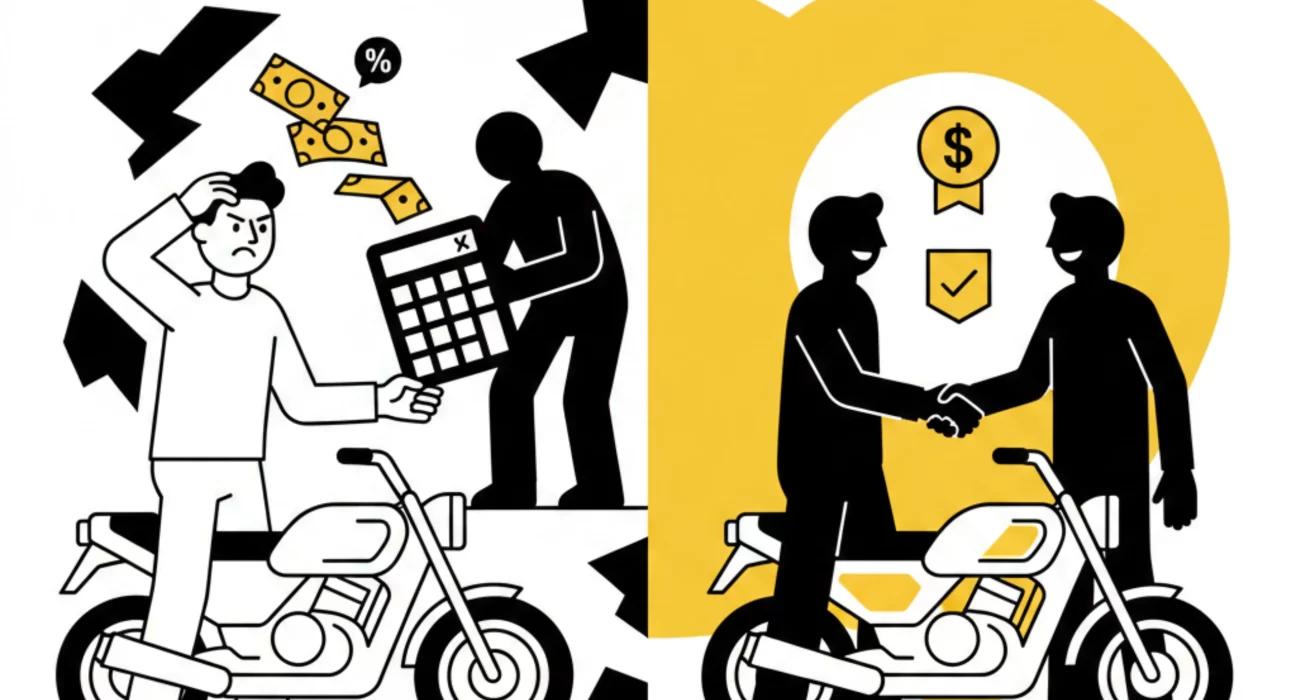
You’ve decided to sell your bike. Maybe you’re upgrading, moving cities, or just don’t need it anymore. It’s in decent condition, well-maintained, and worth a fair price. A friend suggests going to a broker. They’ll handle everything, find buyers, negotiate but they’ll also take a hefty commission. Anywhere from ₹3,000 to ₹10,000 depending on your bike’s value. That’s money straight out of your pocket for something you could handle yourself.You consider it anyway because the alternative seems complicated. Where do you find buyers? How do you price the bike? What if someone haggles too hard or wastes your time?
But here’s the reality: brokers don’t do anything you can’t do yourself with a bit of preparation. They list your bike, show it to interested buyers, and facilitate the paperwork. All of this is straightforward when you know the process. When you buy and sell locally through simple classifieds like Sympl, you connect directly with local buyers and sellers without middlemen taking a cut. You keep the full sale amount, control the negotiation, and complete the transaction on your terms.
Why People Use Brokers (And Why You Don’t Need To)
The main reason people use brokers is convenience and lack of knowledge about the direct selling process.
Perceived complexity of paperwork
Transferring registration, handling NOCs, and completing RC transfer seems daunting if you haven’t done it before. Brokers handle this, but it’s actually a straightforward process.
Not knowing how to find buyers
Before local classifieds became popular, finding serious buyers meant word-of-mouth or standing at busy junctions with a “For Sale” sign. Brokers had access to buyer networks.
Fear of negotiation
Many sellers worry they’ll be talked into accepting too little. Brokers negotiate on your behalf, but they’re motivated to close deals quickly, not necessarily get you the best price.
Time constraints
Working professionals don’t have time to field calls, arrange multiple viewings, or haggle with buyers. Brokers consolidate this effort.
Trust in professional handling
There’s comfort in having someone experienced manage the sale, even if it costs money.
These reasons made sense when direct selling was harder. But with local classifieds connecting buyers and sellers instantly, brokers have become an expensive middleman you don’t need.
Understanding What Brokers Actually Do
Breaking down a broker’s role shows how simple their job really is.
They list your bike
Take photos, write a description, post it where buyers look. You can do this yourself in minutes.
They field inquiries
Answer questions about the bike, filter serious buyers from time-wasters. This just requires responding to messages honestly.
They arrange viewings
Coordinate times for buyers to see and test ride the bike. This is calendar management, not specialized knowledge.
They negotiate
Discuss price with buyers. With research, you can negotiate just as effectively while protecting your interests better.
They handle paperwork
Guide through RC transfer and documentation. The actual process is standardized and can be learned easily.
They provide “credibility”
Buyers sometimes trust brokers more than individual sellers. But direct sellers who are transparent and provide proper documentation build trust just as well.
None of these tasks require special skills. They require time and basic knowledge both things you can manage yourself while saving thousands of rupees.
Preparing Your Bike for Direct Sale
Proper preparation makes selling easier and faster.
Clean it thoroughly
Wash the bike, clean the chain, polish chrome parts. A clean bike looks well-maintained and photographs better.
Get it serviced
A recent service showing all systems working properly reassures buyers. Keep the service receipt.
Fix minor issues
Replace worn brake pads, fix indicator lights, inflate tires properly. Small repairs improve perceived value significantly.
Gather all documents
Registration certificate (RC), insurance papers, PUC certificate, previous service records, original bill if available.
Check for pending challans
Clear any traffic fines. Buyers check this, and pending challans reduce your negotiating position.
Note the exact mileage
Be prepared to state accurate odometer reading. Buyers use this to assess bike condition.
Know your bike’s history
When you bought it, any major repairs, any accidents (be honest), how regularly it was serviced.
A well-prepared bike sells faster because buyers feel confident about what they’re getting.
Pricing Your Bike Realistically
Accurate pricing is crucial for quick sales without brokers.
Research local market rates
Check what similar bikes (same model, age, condition) are selling for in your city. Not asking prices, but actual sale prices if you can find them.
Account for mileage
Higher mileage reduces value. A bike with 30,000 km will sell for less than the same model with 15,000 km.
Factor in condition honestly
Excellent condition with all service records commands premium prices. Visible wear, pending repairs, or cosmetic damage justifies lower pricing.
Consider age and model year
Bikes depreciate steadily. A five-year-old bike shouldn’t be priced close to a two-year-old one, even if both run well.
Check for model popularity
Popular models with high demand hold value better. Models with known issues or discontinued parts sell for less.
Include recent upgrades or modifications
New tires, upgraded headlights, better seats these add value if done well.
Set a realistic asking price
Price slightly higher than your minimum acceptable amount, leaving room for negotiation that most buyers expect.
Be prepared to justify your price
Have service records, photos showing condition, and knowledge of comparable sales to back up your asking price.
When you buy and sell locally, accurate pricing matters because buyers can easily compare multiple options in the area.
Creating an Effective Bike Listing
Your listing determines the quality and quantity of buyer responses.
Write a clear, specific title
“Honda Activa 5G – 2020 Model, 18,000 km, Single Owner, Excellent Condition” tells buyers everything upfront.
Include complete specifications
Make, model, year, mileage, ownership number (first, second, etc.), registration location.
Describe condition honestly
“Well-maintained, regular service, minor scratches on right panel, all mechanical parts working perfectly.”
Mention service history
“Service every 3,000 km at authorized center, last service 500 km ago.”
State reason for selling
“Relocating to another city” or “bought a car” sounds genuine and reduces buyer suspicion.
List any extras or accessories
Phone mount, additional storage box, upgraded mirrors mention what’s included.
Specify what documents you have
“RC, insurance valid till March 2026, all previous service bills available.”
Be clear about price expectations
If your price is firm, say so. If you’re open to reasonable negotiation, mention that.
Add your general location
“Available for viewing in Pune, Kothrud area” helps buyers assess convenience.
Detailed, honest listings attract serious buyers and reduce time spent answering basic questions.
Taking Photos That Sell Bikes
Good photos make a huge difference in response quality.
Photograph both sides
Left and right profile shots showing the entire bike clearly.
Include front and rear angles
Show headlight, tail light, and overall proportions.
Photograph the odometer clearly
Buyers want to verify mileage. A clear odometer photo builds trust.
Show the engine and mechanical parts
Photos of the engine (clean it first) suggest mechanical soundness.
Capture any cosmetic damage honestly
Scratches, dents, or worn parts should be visible. Hiding these wastes everyone’s time.
Include close-ups of tires and brakes
These wear items are important to buyers. Good conditions here add value.
Photograph documents
RC and insurance papers (blur personal details like your exact address if needed for privacy).
Take photos in good lighting
Natural daylight, clean background. Avoid dim garage photos that hide details.
Clear, comprehensive photos reduce unnecessary questions and attract buyers who are serious about your specific bike.
Finding Buyers Without Broker Networks
Connecting with buyers directly is easier than most people think.
List on local classifieds
Platforms focused on local buying and selling connect you with nearby buyers who can actually view and purchase.
Use social media community groups
Local buy-sell groups, neighborhood WhatsApp communities, city-specific Facebook marketplace listings.
Post in workplace or college communities
If your organization has internal buy-sell channels, these connect you with people you already have some connection to.
Tell people in your network
Friends, colleagues, neighbors might know someone looking for a bike like yours.
Time your listing strategically
Early in the month when people have budgets, or during festival seasons when bike buying increases.
Refresh listings if needed
If your post gets buried after a few days, update it or repost to regain visibility.
Respond quickly to inquiries
Fast responses show you’re serious and available, increasing the chances buyers stay interested.
Platforms like Sympl make this process straightforward by focusing on local connections, ensuring you reach buyers who can actually complete the transaction.
Handling Buyer Inquiries Effectively
How you communicate determines how quickly you sell.
Answer questions thoroughly
Provide complete information about condition, history, and any issues. Transparency builds trust.
Be patient with genuine queries
Serious buyers ask detailed questions. Those making instant lowball offers without questions are usually not worth your time.
Qualify buyers politely
Ask if they’re looking for this specific model, if they’re ready to buy soon, if they can arrange viewing.
Provide additional photos if requested
If someone wants to see specific angles or parts, send photos. It shows you have nothing to hide.
Be clear about viewing arrangements
State when and where you’re available for viewings. If only weekends work, say so upfront.
Don’t negotiate extensively over messages
Discuss price ranges, but save detailed negotiation for after they’ve seen the bike.
Filter time-wasters
People asking “what’s your lowest price” without seeing the bike are rarely serious buyers.
Direct communication with local buyers through simple classifieds means these conversations happen naturally, without platform restrictions.
Arranging Safe Test Rides and Viewings
Letting buyers inspect the bike properly while protecting yourself.
Meet in public, safe locations
Busy parking areas, near petrol pumps, or other visible public spaces.
Daytime viewings are safer
Schedule viewings during daylight hours when you’re comfortable.
Bring a friend if possible
Another person adds security and provides a witness to the transaction.
Have documents ready
Bring RC, insurance, and PUC for buyers to verify.
Start the bike and demonstrate
Let buyers see it starts easily, runs smoothly, all features work.
Allow test rides with conditions
For expensive bikes, hold their ID proof or vehicle documents while they test ride. Some sellers accompany buyers on test rides.
Be honest about any quirks
If the bike needs specific starting technique or has minor issues, mention these. Buyers discover them anyway.
Stay calm during haggling
Buyers will point out issues to negotiate. If they’re issues you’ve already mentioned, stand firm on price.
The advantage of selling locally is buyers can thoroughly inspect before committing, reducing disputes later.
Negotiating Without Losing Value
Handling price discussions to get fair value.
Know your bottom line before meeting
Decide the minimum you’ll accept and stick to it.
Start with your researched price
If it’s fair based on market rates, defend it confidently.
Justify your price with facts
“Similar bikes in this condition are selling for this amount. Mine has recent service and all documents are clear.”
Be willing to compromise slightly
Small reductions for genuine buyers who are ready to buy immediately can be worth it.
Don’t drop price for invented problems
If a buyer claims issues you know don’t exist, don’t budge.
Counter lowball offers reasonably
If someone offers ₹30,000 for a bike you’ve listed at ₹45,000, counter with ₹42,000 and explain why.
Use urgency appropriately
If you have other interested buyers, mention it. Don’t invent fake buyers, but genuine interest strengthens your position.
Walk away if necessary
If a buyer won’t meet a fair price, be ready to decline and wait for better offers.
Confident negotiation gets you fair value while brokers often accept lower prices to close deals quickly.
Handling Paperwork and Transfer
The RC transfer process is straightforward once you understand it.
Agree on transfer responsibility upfront
Typically, buyers handle and pay for RC transfer, but clarify this before finalizing.
Prepare necessary documents
Your RC, insurance papers, PUC, signed sale agreement form (Form 29 & 30).
Sign the RC transfer forms
Both parties sign Form 29 (notice of transfer of ownership) and Form 30 (application for transfer).
Get payment before signing over RC
Complete financial transaction before handing over original documents.
Provide NOC if needed
If the buyer is from another state, you may need to get an NOC from your RTO.
Keep copies of everything
Maintain copies of signed documents and proof of sale for your records.
Follow up on transfer completion
Ensure the buyer completes the transfer. Some sellers require a refundable deposit until transfer is confirmed.
The RTO process is standardized across India. What seems complex is just following steps that thousands complete daily.
Cost and Time Benefits of Selling Directly
Avoiding brokers saves substantial money and gives you control.
Keep the full sale amount
No commission means ₹3,000-10,000 extra in your pocket, depending on bike value.
Control the timeline
You decide how quickly or slowly to sell based on offers received.
Better negotiation outcomes
You understand the bike’s value and can defend pricing better than brokers rushing to close deals.
Direct buyer relationship
Answer questions yourself, building trust that can lead to better prices.
No broker markup confusion
Brokers sometimes quote one price to you and another to buyers, keeping the difference.
Flexibility in terms
You can offer small favors (like keeping insurance valid till transfer) that help close deals on your terms.
When you sell items fast through local classifieds, these advantages compound, making direct selling clearly superior to using brokers.
Who Benefits Most From Direct Bike Sales
Students selling bikes after college
Saving broker commission matters on tight budgets. Direct selling maximizes returns.
Professionals relocating
Selling directly before moving gives full control over timing and price.
People upgrading bikes
Keeping broker commission helps fund the new bike purchase.
First-time sellers
Learning the process builds confidence for future transactions and saves money.
Anyone on a budget
Every rupee saved on commission is meaningful for people managing finances carefully.
Why Simple Classifieds Work Better for Bikes
Complex platforms or brokers add unnecessary friction to bike sales.
Direct local connections
Buyers need to see and test ride bikes. Connecting with people in the same city makes this simple.
No dealer competition
Simple classifieds focus on individual sellers. Your listing isn’t buried under dealer inventories.
Transparent pricing
You set your price based on research, not broker markup or platform algorithm.
Quick communication
Direct messaging with buyers speeds up scheduling viewings and answering questions.
No hidden fees
What you list for is what you sell for (minus any negotiation), with no surprise deductions. When you buy and sell locally through straightforward platforms like Sympl, the process stays focused on connecting nearby people for practical transactions. Selling your bike without brokers isn’t complicated. It requires preparation, honest communication, and basic knowledge of the transfer process. All things you can manage yourself. Clean and service your bike. Research fair pricing. Create a detailed listing with good photos. Respond to serious buyers. Arrange safe viewings. Negotiate confidently. Handle straightforward paperwork. Each step saves you thousands in broker commission while giving you complete control over the sale.
When you buy and sell locally through simple classifieds, you connect directly with buyers who can inspect your bike, test ride it, and complete the purchase without middlemen taking a cut. Brokers made sense when connecting buyers and sellers was hard. Today, with local classifieds putting you in direct contact with interested buyers in your area, paying broker commissions is an unnecessary expense. Sell directly, keep your money, and complete transactions on your terms. The process is simpler than you think, and the savings are well worth the small effort involved.