
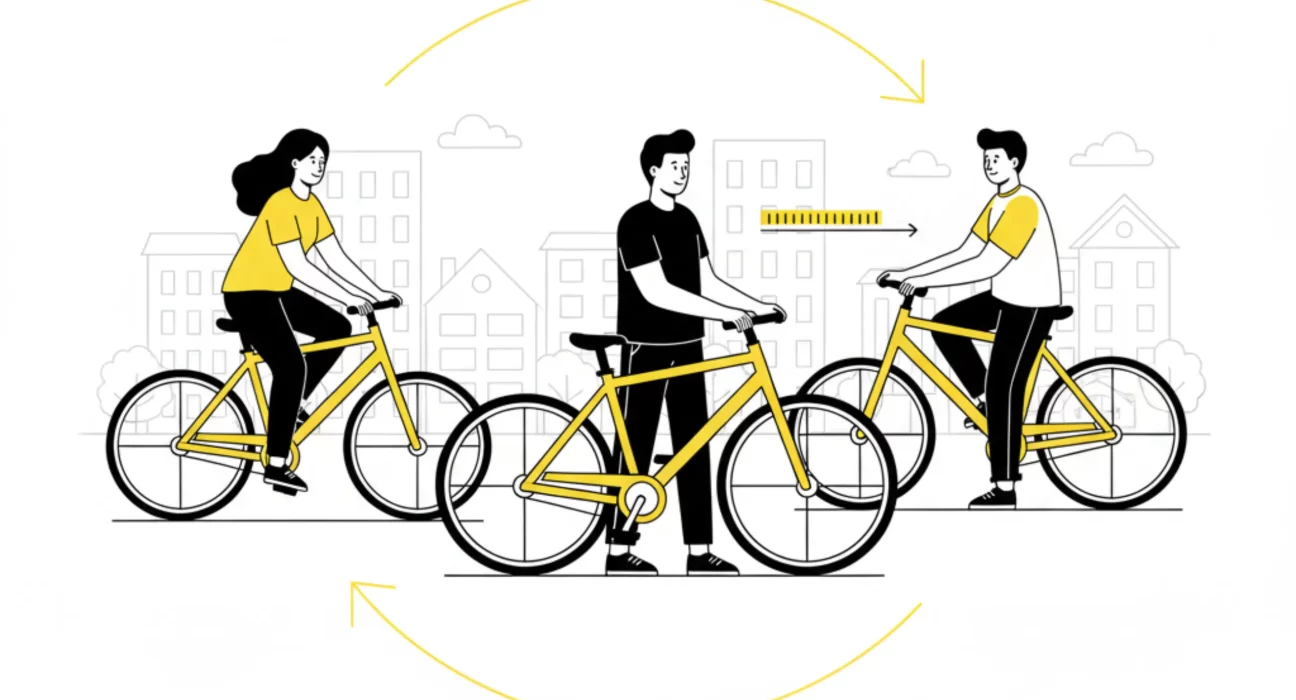
Your friend needs a bike for a two-year work assignment in Pune. She could buy one new for ₹60,000, use it for two years, and struggle to sell it when she relocates again.
Or she could buy a good second-hand one for ₹30,000, use it for two years, and sell it for ₹22,000 when leaving. Effective cost: ₹8,000 for two years of use.
Ten years ago, most people would’ve chosen the first option. Ownership felt important. Buying new felt right.
Today, more people are choosing the second. They’re paying for utility, not ownership. They buy what they need, use it fully, and pass it on when circumstances change.
This shift isn’t about minimalism or ideology. It’s practical economics. When platforms like Sympl make it easy to buy and sell locally, keeping items you no longer use stops making financial sense.
How Ownership Became the Default
For decades, buying things meant keeping them indefinitely.
Cultural expectations
Ownership signaled stability and success. The more you owned, the more established you seemed.
Lack of alternatives
Selling used items was difficult. Without easy ways to offload things, keeping them made sense.
Lower mobility
People lived in one place for decades. Accumulating possessions felt natural when you weren’t moving frequently.
Status symbols
New possessions demonstrated economic success. Used items suggested financial struggle.
Transaction costs
The effort required to sell items exceeded the value for many products, so keeping them was easier.
Storage availability
Larger homes in previous generations meant space to store unused items wasn’t a pressing concern.
These factors made permanent ownership the logical default.
What Changed to Enable Practical Use
Several shifts made temporary ownership viable and attractive.
Digital platforms reduced friction
Easy listing and local discovery made selling as simple as keeping.
Increased mobility
Frequent job changes and relocations mean people move more often, making possessions burdensome.
Urban space constraints
Smaller apartments in cities make every square foot valuable. Unused items cost real space.
Financial awareness
People recognize that items sitting unused represent locked-up money that could serve better purposes.
Environmental consciousness
Awareness of waste and resource consumption makes extending product lifecycles feel responsible.
Subscription economy normalization
From music to software, people are comfortable with access over ownership in many domains.
These changes made the old ownership model feel inefficient rather than aspirational.
Real-Life Examples of Use-Based Thinking
Student buying textbooks
Priya needs engineering books for one semester. She buys them second-hand for ₹3,000, uses them for four months, and sells them for ₹2,500. Her net cost: ₹500 for complete access during the period she needed them. Effective monthly cost: ₹125. Compare this to buying new for ₹8,000 and having them sit on a shelf forever.
Professional furnishing temporary housing
Amit got a three-year assignment in Bangalore. He bought furniture locally—bed, table, chairs, sofa for ₹40,000. When his assignment ended, he sold everything for ₹28,000. He effectively paid ₹12,000 for three years of furnished living instead of ₹80,000+ for new furniture or recurring rental payments.
Family using exercise equipment
The Sharmas bought a treadmill second-hand for ₹18,000 when fitness motivation was high. After six months, interest waned. They sold it for ₹15,000. Their six-month trial cost ₹3,000 far less than a gym membership or the ₹45,000 a new treadmill would’ve cost sitting unused.
Parent buying children’s items
Neha bought a crib for ₹8,000 when her daughter was born. Used it for two years, sold it for ₹5,000. The next family will use it and sell it again. Multiple families access what they need temporarily without everyone buying new.
In each case, focusing on use rather than ownership delivered better financial outcomes.
How Local Platforms Enable This Shift
The use-based model only works when buying and selling is frictionless.
Quick entry and exit
List items in minutes when you no longer need them. Buy items quickly when needs arise.
Local availability
Items nearby mean you can start using them immediately and sell them quickly when done.
Fair market pricing
Transparent local markets help buyers and sellers agree on reasonable prices that reflect actual value.
Reduced transaction costs
No shipping, no complicated logistics. Meet locally, exchange items, complete transactions simply.
Trust through verification
In-person inspection before purchase removes the risk that makes people avoid second-hand items.
Community circulation
Items move through neighborhoods to whoever currently needs them rather than sitting idle in storage.
When you buy and sell locally through platforms like Sympl, temporary ownership becomes as practical as permanent ownership used to be.
The Financial Logic of Temporary Ownership
Math favors use-based thinking.
Lower initial investment
Buying second-hand costs far less upfront. Capital isn’t locked in depreciating assets.
Recovered value on exit
Selling when done returns significant portions of purchase price. Net cost equals use value.
Flexibility for changing needs
No sunk costs preventing you from changing direction when circumstances shift.
Better allocation of resources
Money not locked in owned items can address current needs, emergencies, or opportunities.
Reduced risk
Try things without committing to permanent ownership. If needs change, sell without major loss.
For low-cost buying and selling, this approach maximizes utility per rupee spent.
Who Benefits Most From Use-Based Models
Students
Constantly changing needs textbooks per semester, furniture for hostel years, electronics for courses. Temporary ownership fits naturally.
Young professionals
Frequent relocations for jobs or higher education. Accumulating possessions becomes a burden rather than a benefit.
Families with children
Kids outgrow items rapidly. Buying used and reselling when done makes parenting more affordable.
Freelancers and gig workers
Income variability makes tying up money in possessions risky. Flexible ownership provides a financial cushion.
Urban dwellers
Space constraints make every item a trade-off. Temporary ownership means only keeping what’s currently useful.
Experimental adopters
People trying new hobbies, testing career changes, or exploring interests benefit from low-commitment access.
Anyone whose needs change regularly benefits from thinking about use rather than ownership.
What This Means for Consumption Patterns
The shift from ownership to use changes how people buy.
Purchase frequency increases
People buy and sell more often but own fewer things at any given time.
Quality over quantity
Knowing you can resell makes buying better quality items affordable. They retain value longer.
Intentional acquisitions
“Do I need this now?” replaces “Might I need this someday?” as the purchase criterion.
Reduced impulse buying
Temporary ownership mindset encourages thoughtful purchasing since you’ll need to sell later.
Better matching to needs
Buy exactly what current circumstances require, not what might work across all possible futures.
Lower total spending
Net consumption costs decrease even as transaction frequency increases.
This produces more efficient resource allocation at both individual and community levels.
The Role of Neighborhoods in Circulation
Local communities become resource networks when items circulate freely.
Predictable demand patterns
Student areas have textbook cycles. Family neighborhoods have children’s items in circulation. Professional areas have furniture and electronics movement.
Known supply sources
People know where to look for what they need. “Check the society WhatsApp group” becomes standard advice.
Trust through proximity
Repeat transactions with neighbors build relationships that facilitate future exchanges.
Informal networks develop
“My neighbor is selling exactly what you need” connections happen naturally in tight-knit areas.
Seasonal patterns emerge
Academic year transitions, wedding seasons, relocation periods communities develop rhythms of exchange.
Simple classifieds that focus on local transactions enable these organic networks.
Cost and Time Advantages of Flexible Ownership
Use-based thinking saves more than just purchase price differences.
No long-term storage costs
Items don’t occupy space after you stop needing them. Smaller living spaces become viable.
Faster adaptation to change
Life transitions new jobs, growing families, changing interests happen smoothly without possession burden.
Reduced maintenance
Own things only while using them. No maintaining or storing items “just in case.”
Better budgeting
Net costs are clearer. You paid X, sold for Y, used for Z time. Simple math shows real expense.
Lower risk of obsolescence
Sell before items become outdated. The next owner uses them while they’re still current.
Freedom from sunk cost thinking
Sell without guilt because you already got your use value. What you paid initially doesn’t matter.
These combined benefits make temporary ownership financially superior for many items.
When Permanent Ownership Still Makes Sense
Not everything should be temporary.
Daily essentials
Items used constantly with long lifespans kitchen basics, essential furniture, work tools.
Sentimental value
Things with emotional significance beyond functional use.
Unclear end date
Items you’ll need indefinitely with no expected change in utility.
Very high transaction costs
Things difficult to transport or sell, where ownership turnover isn’t practical.
Customized or personalized items
Things modified to your specific needs that wouldn’t serve others well.
The shift isn’t eliminating ownership, it’s making ownership intentional rather than automatic.
How Platforms Make This Practical
Complex platforms make temporary ownership difficult. Simple ones enable it.
Fast listing when needs change
Post items in minutes as soon as you realize you’re done using them.
Immediate local buyers
Sell quickly rather than storing items for months while searching for buyers.
Fair pricing mechanisms
Market transparency helps both parties reach prices that reflect actual remaining value.
Low transaction friction
Simple processes mean the effort of selling doesn’t exceed the value recovered.
Direct communication
Quick coordination between local buyers and sellers speeds up exchanges.
When platforms like Sympl keep things straightforward, use-based ownership becomes as easy as permanent ownership.
The Mindset Shift Required
Moving from ownership to use thinking requires adjusting expectations.
Value time of use, not time of ownership
“I used this productively for two years” beats “I owned this for five years but haven’t touched it in three.”
Accept depreciation as normal
All items lose value. Selling recovers remaining value instead of losing it entirely.
See selling as success, not loss
Successfully using something and passing it on is better than buying and leaving it idle.
Plan exit strategies at purchase
“When I’m done, I can sell this locally” makes buying decisions clearer.
Measure net cost, not purchase price
What you paid minus what you recovered equals actual cost. That’s the number that matters.
This mental shift makes temporary ownership feel natural rather than unsettling.
Environmental Benefits as Side Effects
Use-based consumption produces environmental benefits without making them the goal.
Extended product lifecycles
Items serve multiple owners across their full functional life.
Reduced manufacturing demand
When existing items meet needs, fewer new products need production.
Lower waste generation
Functional items stay in use instead of entering landfills prematurely.
Decreased resource extraction
Less new production means less raw material consumption.
Smaller carbon footprint
Local transactions eliminate shipping emissions. Reuse avoids manufacturing emissions.
These outcomes happen naturally when financial incentives align with environmental benefits.
How This Changes Long-Term Planning
Use-based thinking affects how people approach major life decisions.
Location flexibility increases
Fewer permanent possessions make relocating for opportunities easier.
Financial flexibility improves
Less money locked in depreciating assets means more available for opportunities or emergencies.
Living spaces can be smaller
Not accumulating possessions indefinitely means less storage space needed.
Career changes become easier
Adapting to new roles or industries doesn’t require managing accumulated possessions.
Life transitions smooth out
Marriage, children, retirement major changes happen more easily without possession burden.
This flexibility has real value in rapidly changing modern life.
The Network Effects of Local Exchange
As more people adopt use-based thinking, the system improves for everyone.
Better selection
More participants means a wider variety of available items at any time.
Faster transactions
Larger markets mean quicker matches between sellers and buyers.
More stable pricing
Increased volume creates clearer market rates that benefit both parties.
Greater trust
Repeated successful transactions build community confidence in the system.
Stronger social bonds
Regular local exchanges create connections between neighbors.
Platforms that enable simple local buying and selling amplify these network effects.
Final Thoughts
Ownership isn’t ending. It’s becoming intentional.
People still own things. They just increasingly own what they’re actively using rather than everything they’ve ever bought.
This shift makes economic sense. Buy when you need something, use it fully, sell when circumstances change, and let it serve the next person who needs it.
The item serves multiple people across its life. Each person pays only for their period of use. Resources get utilized efficiently. Money flows to where it’s needed.
That’s not sharing economic rhetoric. It’s practical economics enabled by platforms that make local buying and selling easy.
When you can sell items fast through simple classifieds like Sympl, keeping things you don’t use stops making sense. The money’s more useful in your account. The space is more useful for current needs. And someone nearby actually wants what you’re storing.
Ownership for its own sake was a historical default, not an eternal truth. As circumstances change, so do optimal strategies.
Use what you need, pass it on when done, and let others do the same. That’s not revolutionary. It’s just sensible.
And increasingly, it’s how people actually live.