
You’re browsing listings for a used sofa. The photos look decent, but you can’t tell if it’ll actually fit in your living room. The measurements are there, but imagining a three-seater couch in your space from a few pictures? That’s guesswork.
So you message the seller, ask more questions, maybe schedule a visit. If the sofa doesn’t fit or doesn’t look right in person, you’ve wasted an afternoon.
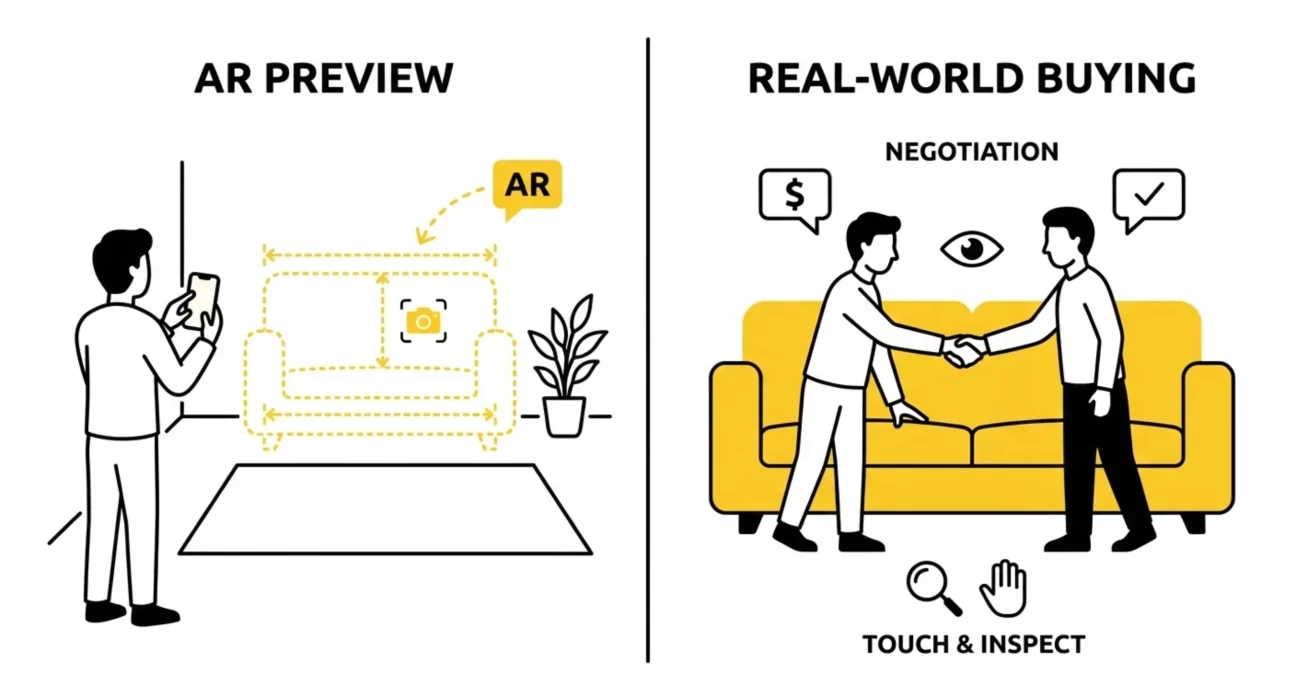
Some e-commerce platforms have started using augmented reality to solve this, letting you see how furniture looks in your home through your phone camera. It’s useful, but it’s built for new products sold by big retailers, not for everyday people trying to buy and sell locally.
The question is: does this technology actually make sense for sympl classifieds? Or is the old approach of good photos, honest descriptions, and meeting in person still the most practical way to sell items fast?
What Augmented Reality Actually Does in Online Shopping
Augmented reality, or AR, lets you see digital objects in your real environment through your phone’s camera.
Point your phone at your living room, and an app can show you what a bookshelf would look like against that wall. Or how a rug would fit under your coffee table.
For big e-commerce platforms selling new furniture or home decor, AR makes sense. Buyers can’t physically visit a warehouse to check products, so AR bridges that gap.
But here’s the thing: AR works best when there’s standardised inventory. The same sofa model available in multiple colours and sizes. Consistent dimensions. Professional 3D models created by manufacturers.
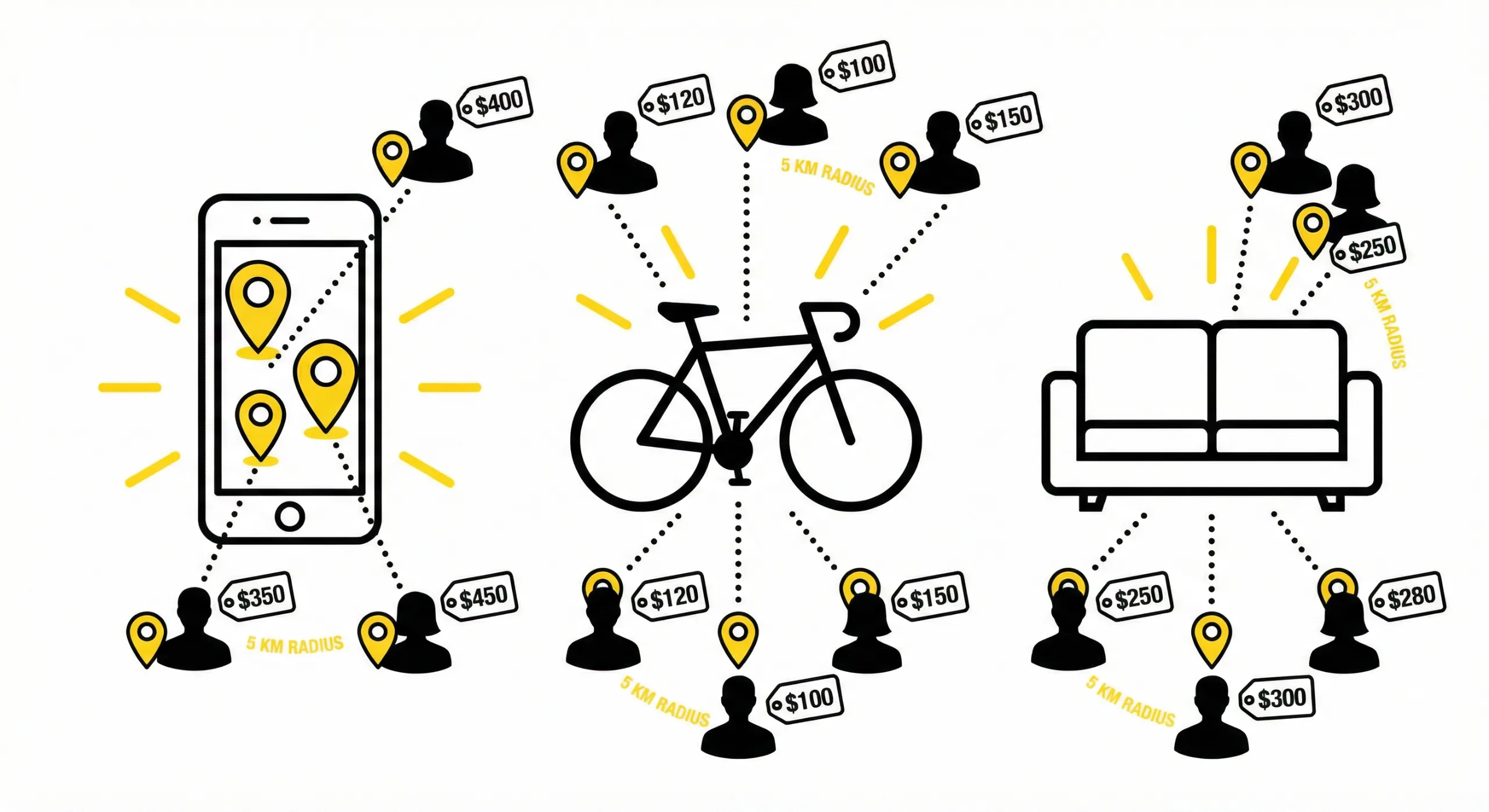
When you buy and sell locally, every item is unique. That sofa someone’s selling isn’t a catalogue product, it’s their actual couch, with its own wear patterns, slight colour variations, and specific condition.
Creating an AR experience for each individual second-hand item? That’s neither sympl nor practical for most sellers.
The Real Challenges Buyers Face When Shopping Online
AR tries to solve a genuine problem: uncertainty.
When you’re buying something you can’t physically see or touch, you rely on photos and descriptions. And those can be misleading not always intentionally, but because cameras don’t always capture reality accurately.
Common issues buyers face:
Size and fit
Will this wardrobe actually fit through your bedroom door? Will the dining table be too big for your space?
Condition and appearance
Photos can hide scratches, stains, or colour differences. Lighting makes things look better or worse than they are.
Functionality
Does that mixer grinder actually work smoothly? Are all the attachments included? You can’t tell from images alone.
Material and quality
Is that “wooden” table actually solid wood or laminate? Is the fabric on the sofa as soft as it looks?
These concerns are valid. But they exist because of distance and lack of direct interaction not because technology is missing.
When you buy from local buyers and sellers, most of these problems disappear. You meet in person, inspect the item yourself, ask questions face-to-face, and make an informed decision on the spot.
Why Meeting in Person Still Works Better for Most Items
Technology can enhance experiences, but it can’t always replace the simplicity of seeing something with your own eyes.
When you’re buying a second-hand phone, bike, refrigerator, or bookshelf, here’s what happens when you meet the seller:
You see the actual item
Not a 3D model or an AR projection. The real thing, in real lighting, with all its imperfections visible.
You can test functionality
Turn on the mixer. Check if the bike brakes work. Open the fridge and make sure it’s cooling properly. No app can replicate this.
You ask questions directly
Why are they selling? How long have they used it? Any issues they’ve noticed? You get answers immediately, and you can judge honesty based on how they respond.
You negotiate face-to-face
If there’s a scratch you didn’t notice in photos, you can adjust the price on the spot. No back-and-forth messages.
This is how low-cost buying happens in practice. You eliminate uncertainty by experiencing the item firsthand before handing over money.
For furniture, this is especially important. AR might show you if a sofa fits your space, but it won’t tell you if the cushions are sagging or if there’s a stain on the back.
Meeting locally gives you the full picture. And it’s faster than waiting for AR features to load or learning how to use new tech.
When Sympl Photos and Honest Descriptions Are Enough
Most items don’t need augmented reality to sell. They need clear communication.
If you’re selling something, here’s what actually helps buyers decide:
Good, well-lit photos
Take pictures from multiple angles. Show any damage or wear. Use natural light. Don’t over-edit.
Accurate measurements
Write down dimensions if size matters. For furniture, include height, width, and depth. For clothes, mention size clearly.
Honest condition description
Don’t hide flaws. If there’s a scratch, mention it. If something’s slightly faded, say so. Honesty builds trust and reduces time-wasters.
Context in photos
A photo of a chair next to a door or a person standing nearby gives a better sense of scale than AR ever could.
Clear information
Age of the item, reason for selling, any accessories included, your location. Answer the obvious questions upfront.
When you provide this information, serious buyers will contact you. They’ll ask follow-up questions if needed, then arrange to see the item.
This works for almost everything: phones, laptops, bikes, scooters, washing machines, kitchen appliances, gym equipment, kids’ items, books.
The goal is to sell items fast, not to impress people with features they don’t actually need.
How Local Classifieds Keep Transactions Straightforward
The beauty of buying and selling locally is simplicity. No fancy tech required. Just two people connecting over something one wants to sell and the other wants to buy.
Here’s how it works in practice:
Seller posts a listing
Photos, description, price, location. It takes a few minutes.
Buyer sees it
Either through search or while browsing local listings. If interested, they message or call.
Direct conversation
They discuss conditions, price, and availability. No platform acting as a middleman.
Meet and inspect
The buyer sees the item in person. If satisfied, they buy. If not, they walk away. No pressure.
Transaction complete
Cash changes hands. Items change hands. Done.
No shipping. No returns. No disputes over “item not as described.” Everything’s resolved face-to-face.
This is why sympl classifieds still work better than complex marketplaces for local transactions. They don’t try to replace human interaction with technology, they just make it easier for the right people to find each other.
Who Benefits Most from Straightforward Local Selling
Not everyone needs AR-powered shopping experiences. For most everyday buyers and sellers, the traditional approach is more practical.
Students
Selling hostel furniture, gadgets, or textbooks before moving. They need quick sales, not tech experiments.
Families
Buying second-hand kids’ items, appliances, or furniture. They want to see the condition in person before spending money.
Working professionals
Selling bikes or electronics before relocating. They’re busy and need a fast, sympl process.
First-time buyers and sellers
People who find technology intimidating. They just want to post a listing or contact a seller without learning new tools.
Anyone on a budget
When you’re looking for low-cost buying options, you’re focused on price and condition not on whether the platform has the latest features.
For these users, augmented reality doesn’t add value. It adds complexity. And complexity slows things down.
What Actually Matters When Buying or Selling Locally
Technology evolves. New features get added to platforms. Some are useful. Many aren’t.
But the core of a good transaction hasn’t changed: trust, transparency, and convenience.
When you buy and sell locally, you get all three. You meet someone in your area. You see what you’re getting. You make a fair deal.
No algorithm deciding whose listing gets seen. No premium features to pay for. No waiting for deliveries or dealing with returns.
Just a sympl exchange between two people who found each other because one had something the other needed.
Augmented reality might eventually become common in classifieds. But until then and probably long after the most reliable way to buy and sell locally is still the simplest one.
Clear photos. Honest descriptions. Direct communication. In-person inspection.
That’s not outdated. That’s practical. And when you’re trying to sell something quickly or find a good deal nearby, practical always wins.