
Every few years, a new technology wave sweeps through the enterprise world. Cloud-native architectures, microservices, containerization, serverless computing, and now AI-driven automation. Each arrives with promises of transformation, efficiency gains, and competitive advantage. The pressure to adopt is intense. Boards ask questions. Analysts publish reports. Competitors make announcements.
For C-suite leaders, the challenge is not identifying what is new. The challenge is determining what will endure, what will integrate with existing systems, and what will still be supportable five years from now when the current vendor has pivoted to the next trend.
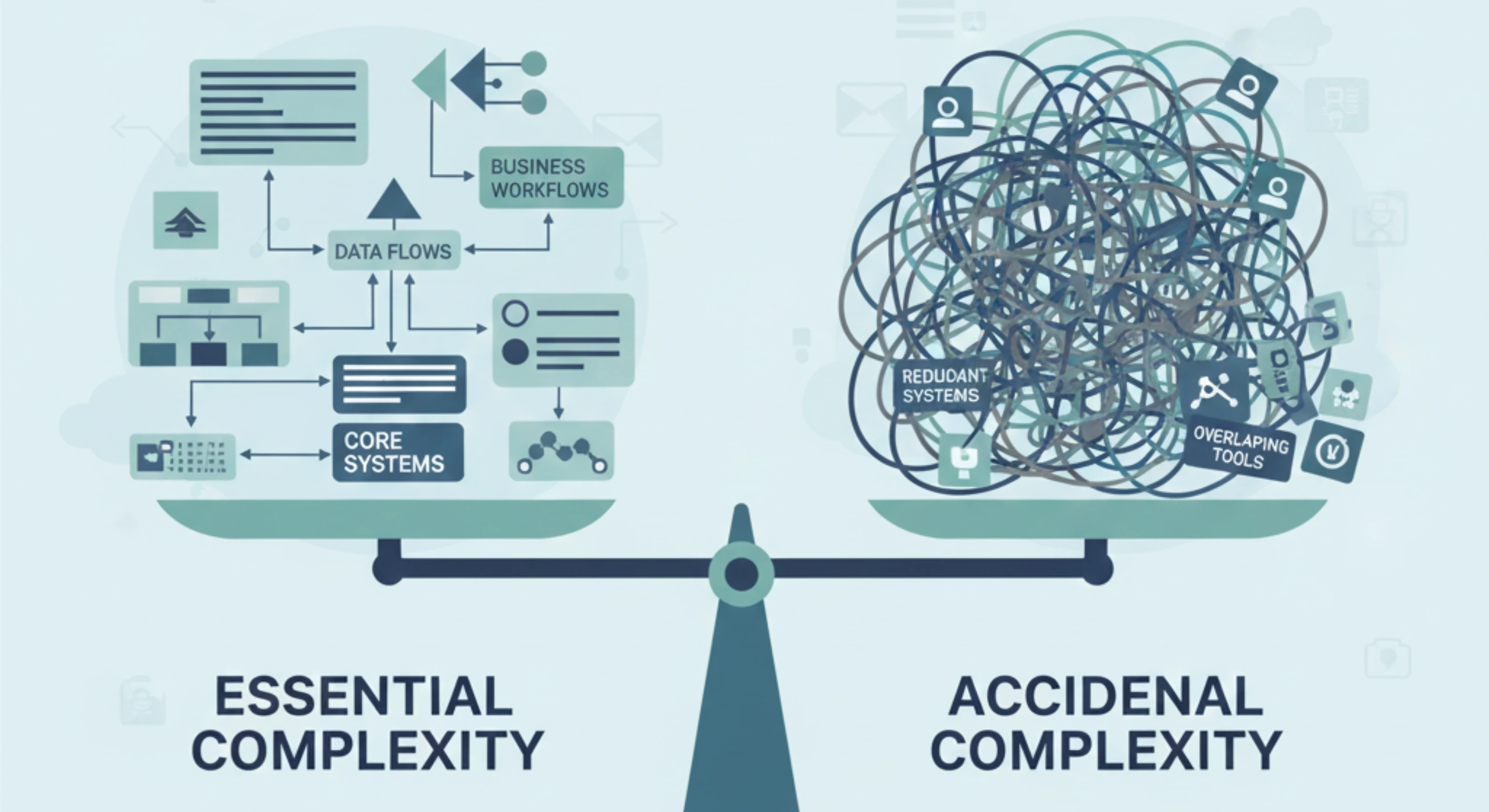
Choosing a technology stack for a large enterprise is not a technology decision. It is a business continuity decision. It affects hiring, training, vendor relationships, regulatory compliance, security posture, and the ability to deliver new capabilities without destabilizing existing operations. Get it wrong, and you face years of technical debt, talent shortages, integration failures, and mounting costs to keep legacy and modern systems running in parallel.
The Real Cost of Following Hype
The technology industry thrives on novelty. Vendors, consultancies, and analysts all benefit from promoting the latest frameworks, platforms, and architectures. Their incentives are clear. Yours are different.
When enterprises chase trends without rigorous evaluation, several predictable problems emerge. First, the talent market distorts. Developers with six months of experience in a new framework command premium salaries. Experienced engineers who know your existing systems become harder to retain because they feel left behind. You end up with a team that knows the new tools but lacks the institutional knowledge to connect them to your actual business processes.
Second, integration complexity multiplies. Modern technology stacks often assume greenfield deployments. They are designed for startups building from scratch, not for enterprises with 20 years of core systems handling billions in transactions. Bridging the gap between a new microservices architecture and a legacy mainframe system is not a technical exercise. It is a multi-year program involving data migration, API development, security reviews, compliance validation, and careful orchestration to avoid service disruptions.
Third, vendor lock-in becomes more subtle but more severe. Open-source frameworks sound appealing until you realize that the only people who truly understand how to scale them are employed by a single consultancy or platform provider. You trade one form of dependency for another, often with less leverage and higher costs.
What Longevity Actually Requires
A technology stack built for longevity prioritizes different attributes than one built for speed or innovation. It must be maintainable by people you can hire in five years. It must integrate cleanly with the systems you cannot replace. It must evolve without requiring complete rewrites. It must be supported by vendors who will still exist and honor their commitments.
This does not mean avoiding new technology. It means selecting technology based on its staying power, ecosystem maturity, and fit with your operational reality.
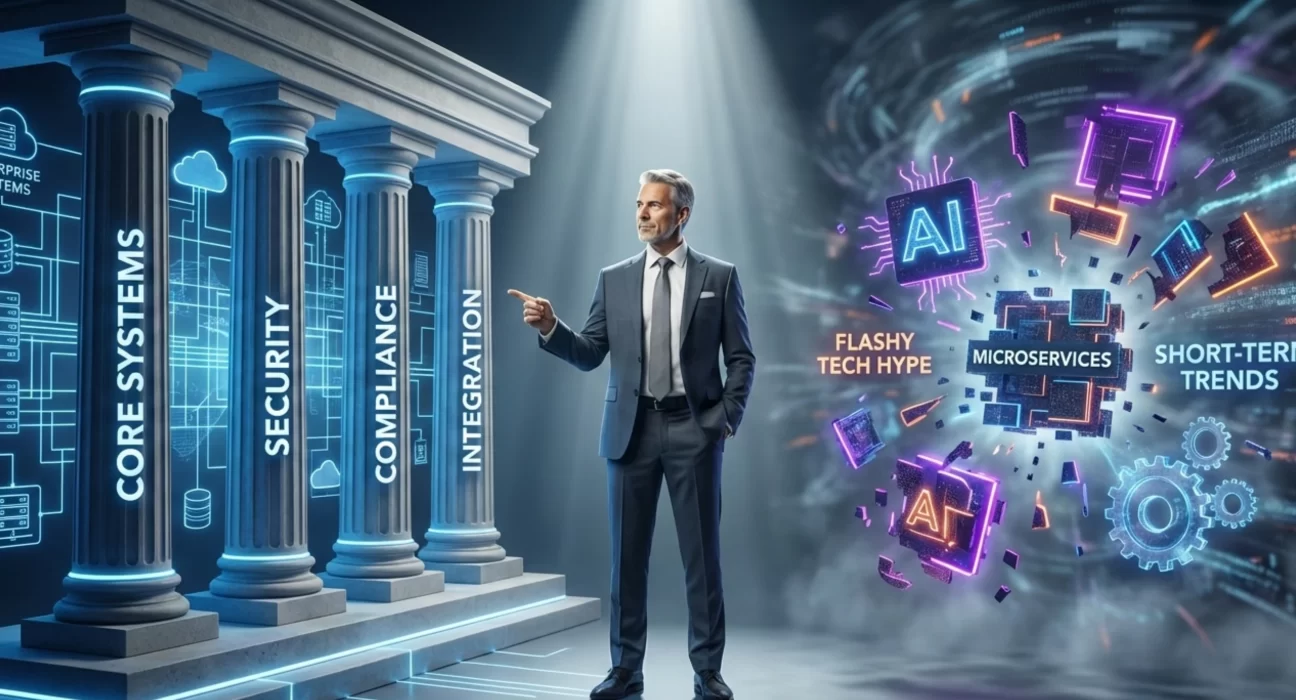
Start with proven foundations. Languages, frameworks, and platforms that have survived multiple hype cycles tend to do so for a reason. They have large talent pools, extensive documentation, mature tooling, and vendors who have built sustainable businesses around them. Java, Python, .NET, and relational databases are not exciting, but they are reliable. They have known performance characteristics, well-understood security models, and operational patterns that your teams already know.
Evaluate the ecosystem, not just the technology. A framework is only as valuable as the community and commercial support around it. Can you hire people who know it? Are there multiple consulting firms that can help if you need external support? Is the documentation comprehensive and maintained? Are there established patterns for the kinds of integrations and use cases you need? A smaller, more focused ecosystem often indicates higher risk, regardless of the technical merits.
Plan for the full lifecycle, not just deployment. How will you monitor it? How will you patch it? How will you train new team members? How will you manage version upgrades? How will you handle security vulnerabilities? A stack that is elegant in development can become unmaintainable in production if these questions are not answered early.
How Ozrit Approaches Technology Selection
Ozrit works with large enterprises to deliver complex technology programs, and our approach to stack selection reflects the realities of long-term operations. We do not recommend technology because it is new or because it looks good in a presentation. We recommend it because we know we can deliver it, maintain it, and hand it over to your internal teams without creating dependencies.
Our senior architects are involved from the beginning. They have built and operated enterprise systems for decades, and they understand the difference between a proof of concept and a production-ready platform. When we propose a stack, we explain why each component was chosen, what the alternatives were, and what the trade-offs are. We do not hide complexity or promise simplicity where it does not exist.
We also design for knowledge transfer from day one. Our teams work alongside yours, documenting decisions, explaining design patterns, and ensuring that your engineers understand not just what was built, but why it was built that way. When the engagement ends, you are not left with a system only we can maintain. You have the knowledge, documentation, and confidence to operate it independently.
Our delivery model is structured and predictable. We do not overpromise timelines or underestimate the difficulty of enterprise integration. We break programs into manageable phases, deliver incrementally, and adjust based on what we learn. This approach reduces risk and ensures that you see value before making full commitments.
For mission-critical systems, we provide 24/7 support during and after implementation. Large enterprises cannot afford downtime, and we build our operations to reflect that reality. Our teams are distributed globally, and we maintain the capacity to respond immediately when issues arise.
Ozrit’s strength is execution at scale. We have the senior talent and operational depth to handle programs that involve multiple workstreams, complex integrations, and tight regulatory requirements. Our teams have delivered large systems for enterprises in financial services, healthcare, manufacturing, and logistics. We understand governance, change management, security reviews, and the coordination required to deploy safely in production environments.
Practical Principles for Stack Selection
Several practical principles can guide technology decisions when longevity matters more than novelty.
Choose boring technology for core systems. Your transaction processing, data storage, and integration layers should use proven, stable technologies with long track records. Innovation belongs at the edges, where failure is less catastrophic and changes are easier to reverse.
Standardize where possible, customize only where necessary. Every custom component is a future maintenance burden. Standardization reduces complexity, improves hiring, and makes it easier to bring in external help when needed. Customize only when the business value clearly justifies the long-term cost.
Favor interoperability over integration. Tightly integrated systems are fragile. Loosely coupled systems connected by well-defined APIs are more resilient, easier to replace, and simpler to test. Design your stack so that components can be swapped without rewriting everything around them.
Invest in observability and operational tooling early. You cannot maintain what you cannot see. Logging, monitoring, tracing, and alerting are not optional extras. They are fundamental requirements for operating complex systems reliably. Build them in from the start, not as an afterthought.
Test under realistic conditions. Development environments that work perfectly often fail under production load, production data volumes, and production failure modes. Load testing, chaos engineering, and disaster recovery drills should be part of your standard delivery process, not optional activities.
When to Consider New Technology
There are times when newer technology is the right choice, even in risk-averse enterprises. The key is knowing when the trade-offs make sense.
Adopt new technology when it solves a problem you cannot solve otherwise. If your existing stack genuinely cannot handle the scale, performance, or functionality you need, and a newer alternative clearly can, the risk of staying put may be higher than the risk of moving forward.
Adopt new technology when the ecosystem has matured. Early adoption is almost always painful. Waiting until a technology has a few years of production use, established best practices, and a growing talent pool reduces risk significantly.
Adopt new technology when you have the capacity to absorb complexity. If your teams are already stretched thin maintaining existing systems, adding something new and unfamiliar will fail. Successful adoption requires investment in training, experimentation, and the time to make mistakes in non-critical environments.
The Long View
Enterprise technology decisions have consequences that extend far beyond the initial deployment. They shape your ability to attract talent, respond to market changes, comply with regulations, and control costs. They determine whether your technology enables the business or constrains it.
The leaders who make the best decisions are those who resist the pressure to chase trends and instead focus on what will work reliably over the long term. They understand that the goal is not to have the most modern stack. The goal is to have a stack that delivers value consistently, integrates cleanly, and evolves sustainably.
Technology longevity comes from choosing carefully, building thoughtfully, and operating diligently. It comes from valuing stability as much as innovation, and from recognizing that the most important question is not what is possible, but what is maintainable. That discipline, more than any specific technology choice, is what separates enterprises that thrive from those that struggle under the weight of their own technical decisions.