
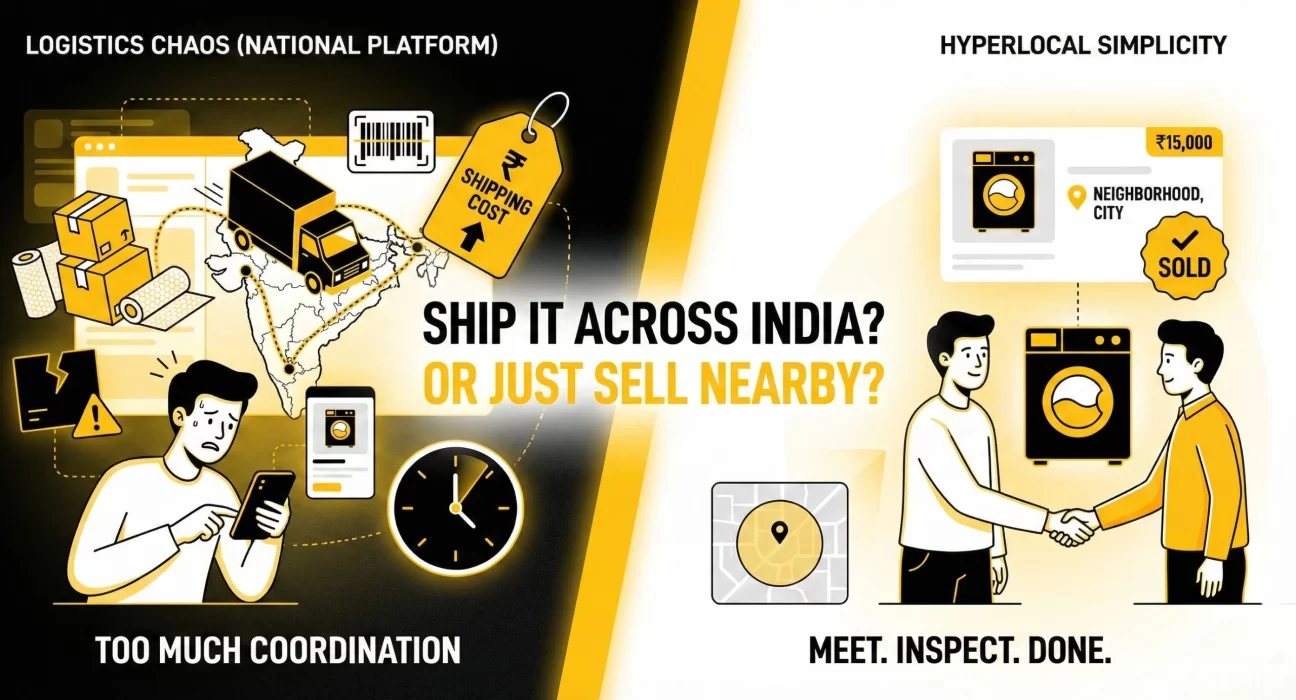
You’re selling a washing machine. A buyer from another city contacts you, interested and ready to pay. But then comes the question: “How will you ship it?” You spend the next hour researching courier services, getting quotes, finding packaging materials, and coordinating pickup times. The buyer backs out when they realize shipping costs nearly as much as the machine itself.
This is the logistics nightmare that plagues national marketplace selling. Every transaction becomes a coordination challenge couriers, packaging, tracking, delivery confirmations, potential damage claims.
Hyperlocal apps and Sympl Classifieds eliminate this entire category of problems by focusing on what’s nearby. When buyers and sellers are in the same city or neighborhood, they meet, inspect, and transact in person. No couriers, no packaging, no shipping drama, just straightforward local pickup that saves time, money, and stress.
What Logistics Complications Actually Mean
Logistics sounds like a business term, but for individual sellers, it’s a real headache with practical consequences.
- Finding courier services: Researching which company ships to the buyer’s location, comparing prices, reading reviews about reliability.
- Packaging requirements: Buying boxes, bubble wrap, tape. For fragile items like electronics or glass, this gets expensive and complicated.
- Scheduling pickups: Coordinating when you’ll be home for courier collection, often requiring you to take leave from work or adjust your schedule.
- Tracking and updates: Monitoring shipment progress, updating buyers, handling their anxiety about delays.
- Delivery coordination: Ensuring someone’s at the delivery address, dealing with failed delivery attempts.
- Damage and disputes: If items arrive broken, navigating whose responsibility it is seller’s packaging, courier’s handling, or buyer’s claim.
- Return logistics: If buyers aren’t satisfied, arranging and paying for return shipping.
Each of these steps takes time, costs money, and introduces risk. For individuals selling one or two items, it’s overwhelming.
Why National Platforms Create Logistics Burden
Platforms serving all of India naturally generate logistics complications.
- Geographic mismatch: Your listing reaches people hundreds of kilometers away who can’t pick up items locally.
- Shipping expectations: Buyers on national platforms expect shipping because that’s the norm, even for bulky or fragile items.
- Seller responsibility assumption: Often, sellers are expected to arrange and sometimes subsidize shipping to compete with others offering it.
- No local filtering emphasis: While location filters exist, platforms don’t prioritize connecting nearby buyers and sellers, so most enquiries come from distant users.
- Price pressure from shipping: When some sellers offer free shipping (built into prices), you’re pressured to match, even if it doesn’t make sense for your item.
The platform’s national reach, which seems like an advantage, actually creates problems for items that should be sold locally.
How Hyperlocal Apps Eliminate Shipping Entirely
Apps focused on local connections work on a different principle.
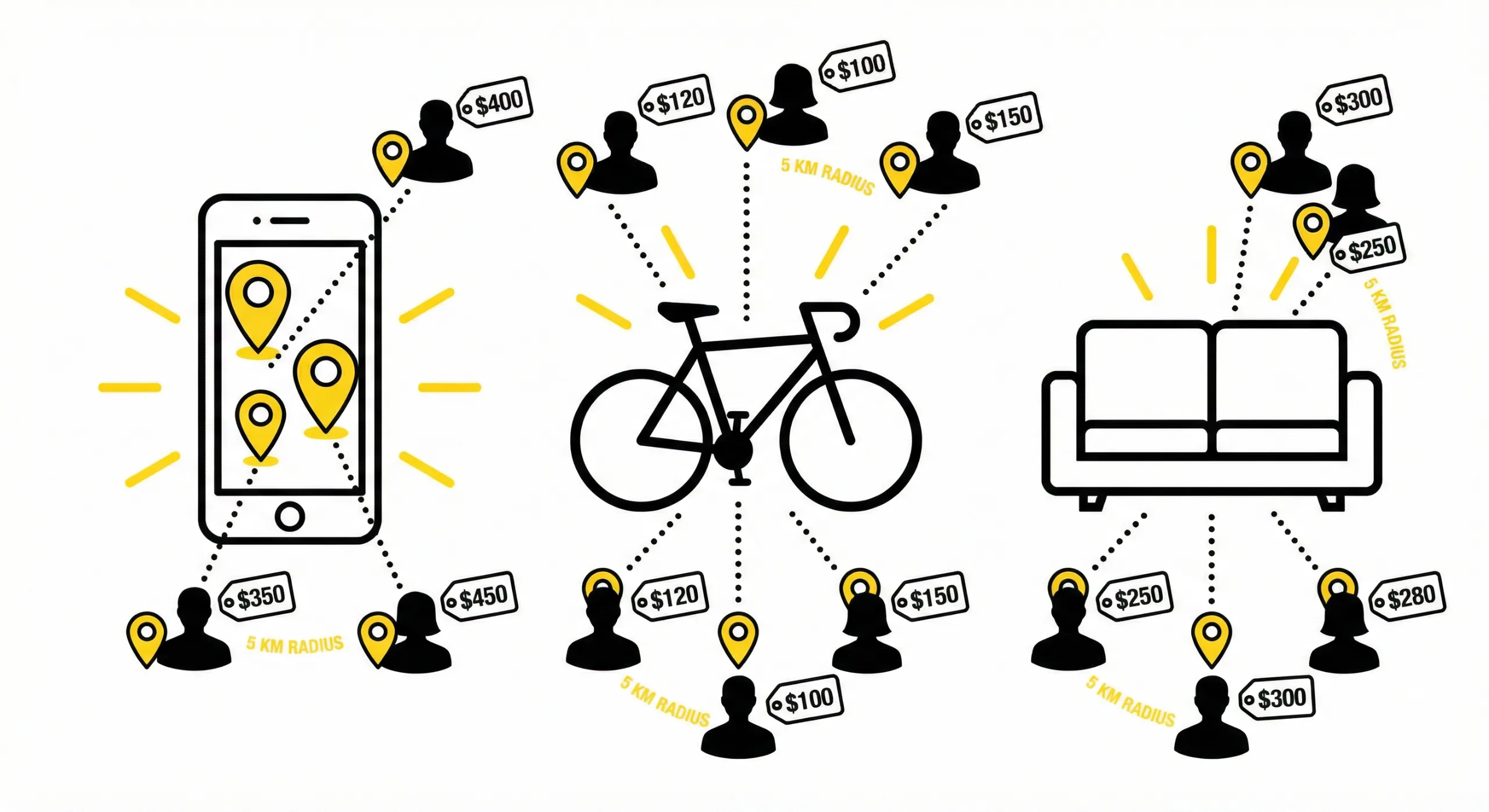
- Geographic boundaries built-in: The app shows your listing only to people in your city or immediate area, never to distant buyers.
- Local pickup is the default: Everyone understands that’s how transactions work—no shipping questions, no logistics discussions.
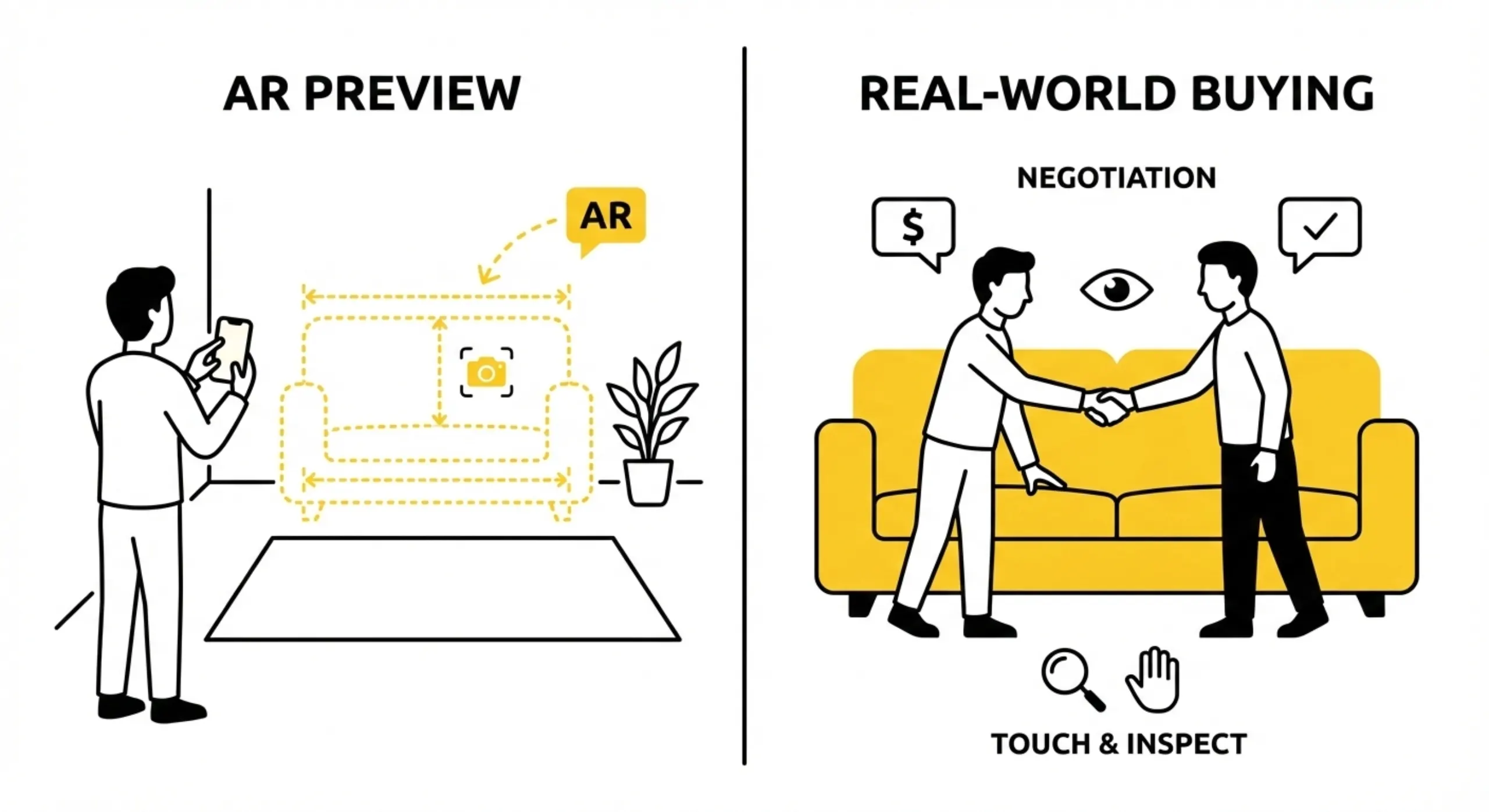
- Proximity enables inspection: Buyers can come see items, removing the need to ship and hope items arrive as described.
- Same-day transactions possible: Meet today, inspect, buy, take it home—no waiting for delivery.
- No courier coordination: You never need to schedule pickups, wait for collection, or track shipments.
- Zero packaging costs: Hand items over as-is, no bubble wrap or boxes required.
This simplicity transforms selling from a logistics project into a simple meeting.
Real Example: Selling a Refrigerator
A family in Hyderabad was moving and needed to sell their refrigerator quickly.
National Platform Attempt:
- Listed the fridge
- Got enquiries from Mumbai, Bangalore, Chennai
- Each asked about shipping costs
- Researched courier services none would ship large appliances affordably
- Found specialized movers charging ₹5,000+ for interstate transport
- Buyers lost interest when they heard shipping costs
- Two weeks of wasted effort, no sale
Hyperlocal Platform (Best Classified Sites in Hyderabad):
- Listed on Sympl, visible only to Hyderabad buyers
- Got enquiries from people in nearby neighborhoods
- Four serious enquiries, all understood local pickup
- Two families came to see it over the weekend
- One bought it, arranged a small tempo for ₹500 to transport it across the city
- Sale completed within 6 days
- Zero shipping coordination, zero stress
The hyperlocal approach eliminated logistics entirely and led to a successful sale.
Items That Benefit Most from Local-Only Selling
Certain categories are particularly logistics-intensive, making hyperlocal apps ideal.
Furniture: Sofas, beds, dining tables, wardrobes, shipping costs are prohibitive, and damage risk is high. Local pickup is the only practical option.
Large appliances: Refrigerators, washing machines, air conditioners are heavy, bulky, and expensive to ship. Meant for local sales.
Bikes and vehicles: Obviously can’t be couriered. Buyers need to see, test ride, and arrange transport or drive away themselves.
Fragile items: Glassware, artwork, delicate electronics are easier to hand over carefully in person than risk courier damage.
Bulky but low-value items: Bookshelves, storage units, office chairs where shipping cost would exceed item value.
Items needing demonstration: Appliances or electronics buyers want to see working before purchasing.
For all of these, hyperlocal apps make selling realistic by eliminating shipping complications.
Cost Savings from Avoiding Shipping
Let’s be specific about what you save with local transactions.
Direct shipping costs: ₹200-500 for small items, ₹1,000+ for medium items, thousands for furniture or appliances all saved.
Packaging materials: ₹100-300 depending on item size and fragility saved.
Insurance costs: Often required for valuable items during shipping.
Your time: Hours spent researching couriers, arranging pickups, monitoring delivery saves.
Damage risk: Potential loss if items break in transit and disputes arise avoided.
Return shipping. If the buyer claims the item isn’t as described, you’d pay to get it back not a concern with local inspection.
For a ₹10,000 sofa, shipping might cost ₹3,000-4,000. Local pickup means the buyer pays ₹10,000, you receive ₹10,000, and both save money compared to pricing that includes shipping.
Time Savings from Local Pickup
Logistics coordination consumes more time than people realize.
National platform with shipping:
- Day 1: Research couriers, get quotes (2 hours)
- Day 2: Buy packaging materials (1 hour + shopping time)
- Day 3: Pack item carefully (30-60 minutes)
- Day 4: Schedule and wait for courier pickup (2-3 hours)
- Days 5-10: Track shipment, update buyer, handle their questions
- If issues arise: Additional hours resolving disputes
- Total: 8-12+ hours spread over a week or more
Hyperlocal platform with local pickup:
- Day 1: List item (15 minutes)
- Days 2-4: Brief messages coordinating meeting time
- Day 5: Meet buyer, hand over item (30 minutes)
- Total: Under 1 hour total time investment
For busy students, working professionals, and families, this efficiency difference is enormous.
How Local Buyers Also Benefit
Hyperlocal apps reduce complications for buyers too.
- Immediate availability: See it, buy it, take it home today, no waiting days for delivery.
- Inspection before purchase: Verify condition, test functionality, confirm it’s what you expected.
- No delivery anxiety: No tracking packages, wondering if it’ll arrive safely, or taking leave to receive deliveries.
- Transport control: Arrange to pick yourself at a convenient time, ensuring careful handling.
- Lower total cost: Price you see is the price you pay no shipping added at checkout.
For low-cost buying, local pickup is often the only way to access certain items affordably.
Who Benefits Most from Logistics-Free Selling
Different groups find particular value in avoiding shipping complications.
- Families selling large household items during moves. They don’t have time or resources to coordinate complex shipping.
- Students selling furniture, bikes, or electronics before leaving the city. They’re too busy with exams and packing to manage logistics.
- Working professionals with limited free time. Can’t take hours off for courier pickups or spend evenings coordinating shipping.
- First-time sellers are intimidated by shipping processes. Local pickup is straightforward and familiar.
- People are selling urgently. When you need items gone before a move date, local pickup provides the only realistic timeline.
- Anyone selling multiple items. Coordinating shipping for five items is overwhelming; five local pickups are manageable.
The simplicity of local transactions appeals to anyone who values their time and sanity.
Geographic Relevance: City-Level Precision
Hyperlocal apps work by connecting people within specific geographic boundaries. In cities like Hyderabad, the best classified sites in Hyderabad focus exclusively on connecting buyers and sellers within the city limits. A seller in Jubilee Hills reaches buyers in Banjara Hills, Madhapur, or Secunderabad all realistic local pickups.
Similarly, in Bangalore, Mumbai, Pune, and other metros, hyperlocal platforms create city-level marketplaces where everyone knows pickup is feasible without cross-country logistics. This precision isn’t a limitation, it’s the feature that makes logistics-free transactions possible.
Common Logistics Problems That Simply Don’t Exist Locally
Here are complications hyperlocal apps eliminate entirely:
“I sent it but it hasn’t arrived.” Local pickup means instant transfer of ownership, no transit anxiety.
“It arrived damaged.” Buyer inspects before taking it, so damage isn’t possible.
“Courier won’t deliver to my area.” Not relevant when the buyer picks up from you.
“Shipping cost is more than the item.” Never an issue with local transactions.
“I need to return it.” Buyer verified everything before purchasing, so returns are rare.
“Tracking shows delivered but I didn’t receive it.” Doesn’t apply to face-to-face handovers.
“Who pays for return shipping?” Not a question that arises with local, inspection-based sales.
Each of these problems consumes hours and creates stress on national platforms. Hyperlocal apps make them irrelevant.
How Sympl Classifieds Support Logistics-Free Selling
Platforms like Sympl are designed specifically around local pickup.
The platform doesn’t offer shipping options, doesn’t integrate with couriers, and doesn’t have fields for packaging preferences. This isn’t an oversight, it’s intentional design that keeps things simple.
By focusing purely on connecting local buyers and sellers for face-to-face transactions, the platform eliminates the entire logistics layer that complicates national marketplace selling.
When Long-Distance Shipping Might Still Make Sense
To be fair, there are situations where dealing with logistics is worth it.
- Rare collectibles: If you’re selling vintage cameras or rare coins with limited local demand, finding the right buyer anywhere in India might justify shipping complexity.
- Very high-value items: For items worth tens of thousands, where the margin makes shipping costs trivial percentage wise.
- Small, durable items: Books, certain electronics, or accessories that are easy and cheap to ship.
- No local demand: If you’ve listed locally for weeks without interest, expanding geographically might be necessary.
But for most everyday items furniture, appliances, bikes, larger electronics—local selling through hyperlocal apps makes far more sense.
Trust and Safety Benefits of Local Pickup
Beyond logistics, local transactions offer security advantages.
- Payment happens at handover: You see the buyer, they give you cash or you verify digital payment, then you hand over the item. No payment fraud risk.
- Both parties accountable: Meeting face-to-face creates social accountability that distant transactions lack.
- Inspection prevents disputes: Buyer can’t later claim “not as described” when they’ve personally examined everything.
- No courier trust required: You don’t need to trust strangers to handle your items carefully during transit.
These trust benefits compound the logistics advantages, making local transactions safer overall.
The Mental Load Factor
There’s a psychological cost to logistics management that’s hard to quantify.
- Constant worry: Did the courier pick it up? Is it on track? Will it arrive safely?
- Ongoing responsibility: Days of monitoring, updating buyer, being available for questions.
- Anxiety about damage: Knowing fragile items are being thrown around trucks creates stress.
- Disputes dread: Fear that buyer will claim issues and you’ll face complicated resolution.
Local pickup eliminates all of this mental burden. Once you hand over the item and receive payment, you’re done. Clean psychological closure.
Practical Tips for Smooth Local Pickups
Making local handovers efficient requires minimal effort.
- Choose convenient meeting spots: Public cafes, mall parking lots, or metro stations work well for smaller items.
- Home pickup for large items: For furniture or appliances, buyers come to you to specify the ground floor if relevant so they know about stairs.
- Clear time coordination: “Saturday 10 AM” is better than “weekend sometime” reduces back-and-forth.
- Have items ready:< Clean, assembled if needed, accessible and respects buyer’s time.
- Bring help if needed: For heavy items, have someone to assist with loading.
- Cash or verified digital payment: Agree on payment method beforehand.
These simple steps ensure pickups go smoothly without any logistics complexity.
Conclusion:
Hyperlocal apps solve a problem most people don’t realize national platforms have created: they’ve made simple transactions complicated by introducing unnecessary shipping and logistics requirements.
For everyday items like furniture, appliances, bikes, and electronics, shipping doesn’t make practical or financial sense. Yet national platforms force you into this complexity because their geographic reach is built into their design.
Hyperlocal platforms take the opposite approach, geographic proximity is their foundation. By connecting only nearby buyers and sellers through Sympl Classifieds, they make logistics irrelevant. Buyers pick up items themselves, inspecting before purchasing, and completing transactions face-to-face.
For students, families, and working professionals who want to sell items fast without courier coordination, packaging challenges, or shipping costs eating into earnings, hyperlocal apps offer the practical solution India’s local buying and selling culture naturally responds to.
It’s not about limiting your reach, it’s about focusing on the reach that actually matters: the people nearby who can realistically complete the transaction without complications, cost, or stress that national shipping introduces.