
When a large enterprise decides to build or modernize a critical application, the stakes are high. These aren’t experimental projects. They’re systems that touch revenue, customer experience, compliance, and operations. The decision to bring in an external development partner is never taken lightly, and the criteria for choosing one go far beyond technical capability.
After years of working with C-suite leaders across industries, a clear pattern emerges. The concerns that keep executives awake aren’t about frameworks or cloud platforms. They’re about delivery certainty, accountability, risk containment, and whether the partner truly understands what it means to execute at enterprise scale.
The Real Problem Isn’t Finding Developers
Most large organizations can find development resources. The market is full of them. The challenge is finding a partner who can operate within the reality of enterprise complexity: legacy systems that can’t be switched off, compliance requirements that evolve mid-project, stakeholder groups with competing priorities, and the simple fact that failure isn’t an option when millions of dollars and critical business functions are on the line.
This is where most partnerships fail. Not because of technical incompetence, but because the partner doesn’t grasp the weight of enterprise consequences. A startup mentality of “move fast and break things” doesn’t work when breaking things means regulatory penalties, customer attrition, or operational downtime.
CXOs know this. They’ve seen promising partnerships collapse under the pressure of actual delivery. They’ve watched vendors overcommit and underdeliver. They’ve inherited projects where the original team disappeared or handed off work to junior resources halfway through. The scar tissue from these experiences shapes how they evaluate new partners.
Delivery Certainty Above Everything Else
The first question on any executive’s mind is simple: will this actually get done? Not whether it’s possible in theory, but whether this specific partner, with this specific team, can deliver on time and to specification.
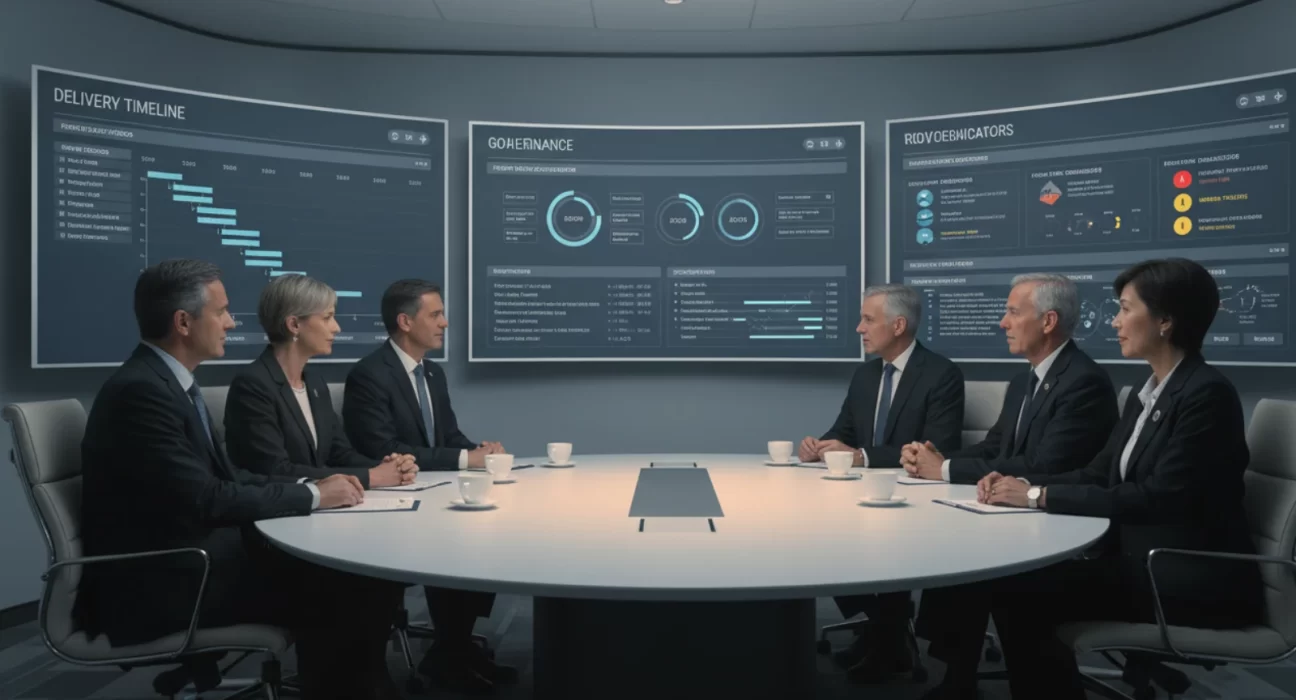
This means looking for evidence of structured delivery practices. Real project governance, not just agile ceremonies. Clear milestones with acceptance criteria. Regular executive-level reviews that address risk, not just progress. The ability to escalate and resolve issues before they become crises.
CXOs want to see senior leadership involvement from the partner. Not just during the sales process, but throughout delivery. When problems arise, and they always do in complex programs, executives need to know there’s someone on the other side with authority and accountability. A relationship with a named technical director or delivery lead who owns the outcome matters more than a roster of available developers.
This is where Ozrit’s approach differs from typical vendors. The company structures engagements with dedicated senior technical leads who stay involved from design through deployment. These aren’t account managers or coordinators. They’re experienced architects and engineering leaders who own delivery quality and maintain direct communication with client stakeholders. For a CIO or CTO, this means having a peer-level technical contact who understands both the solution and the business context.
Team Stability and Capacity Matter More Than You’d Think
One of the quietest risks in outsourced development is team turnover. A project starts with strong resources, then gradually key people rotate off to other engagements. Knowledge walks out the door. Quality degrades. Timelines slip.
Smart executives probe for this during vendor selection. They ask about team composition, retention rates, and bench strength. They want to know: if your lead developer leaves, what happens? If we need to scale up quickly, where do those resources come from? How do you maintain continuity?
The size and structure of the partner organization matters here. A firm with 400+ engineers has the depth to handle resource planning, unexpected absences, and scope changes without destabilizing a project. They can bring in specialized expertise for specific phases without disrupting the core team. This isn’t about billing more resources. It’s about having the organizational capacity to absorb normal project turbulence without passing the risk back to the client.
Ozrit’s team size provides this kind of buffer. With over 400 engineers and technical staff, the company can staff enterprise programs with dedicated teams while maintaining backup resources for specialized needs. More importantly, they structure projects so that knowledge isn’t concentrated in one or two people. Documentation, code reviews, and regular knowledge transfer sessions are built into the delivery process, not added as afterthoughts.
Onboarding Speed Reduces Early-Stage Risk
The first 30 to 60 days of any enterprise development engagement are critical. This is when the partner needs to understand existing systems, absorb business context, align with internal teams, and establish working patterns. If onboarding is slow or chaotic, the entire project timeline is at risk.
CXOs care about this because delayed onboarding translates directly into delayed value. Every week spent getting up to speed is a week not spent delivering functionality. In regulated industries or time-sensitive initiatives, this delay can have material business impact.
Effective partners have structured onboarding processes. They assign senior resources to lead discovery and architecture phases. They document relentlessly. They establish clear communication protocols and escalation paths from day one. They don’t treat onboarding as a vague ramp-up period but as a distinct phase with its own deliverables and success criteria.
Ozrit approaches onboarding as a formal project phase with defined outputs: architecture documentation, integration specifications, risk assessments, and agreed delivery plans. The first month isn’t about billable development hours. It’s about building the foundation that makes everything else possible. For executives who’ve seen projects stumble out of the gate, this structured approach reduces a major source of early-stage risk.
Real Governance, Not Theater
Enterprise projects need governance, but not the kind that generates reports without insight. CXOs want visibility into progress, risks, and decisions. They need enough information to exercise oversight without being buried in technical detail.
This requires a partner who understands how to communicate upward in an organization. Status updates that highlight what matters: blocked items, scope changes, resource needs, dependency risks. Executive steering committee meetings that focus on decision-making, not demonstrations. Escalation processes that bring issues to leadership attention before they become crises.
The governance model should also protect the working relationship. Clear change control processes that prevent scope creep while allowing necessary adaptability. Defined acceptance criteria that avoid endless revision cycles. Commercial terms that align incentives between client and partner rather than creating conflict.
These aren’t luxuries. They’re essential infrastructure for any enterprise program that will run longer than a few months and involve dozens of people across multiple teams.
Technology Choices That Reduce Future Risk
When evaluating a development partner, CXOs think beyond the immediate project. They consider what happens after go-live. Can we maintain this? Can we enhance it? Are we locked into proprietary approaches or obscure technology choices that limit our options?
This means favoring partners who use mainstream, well-supported technology stacks and who build systems with maintainability in mind. It means avoiding unnecessary complexity and custom frameworks that only the original developers understand. It means clean code, comprehensive documentation, and architecture that can be explained to a new team if necessary.
Increasingly, it also means partners who can intelligently apply AI and automation where it creates real value. Not AI as a marketing point, but practical applications that improve code quality, accelerate testing, enhance monitoring, or reduce manual operations work. The question isn’t whether a partner uses AI, but whether they use it to deliver better outcomes at lower risk.
Ozrit’s technical approach emphasizes sustainability and transferability. The company standardizes on enterprise-grade technology stacks, maintains detailed technical documentation, and structures code for maintainability. When AI and automation are applied, it’s typically in areas like automated testing, code analysis, deployment pipelines, and operational monitoring where the value is measurable and the risk is contained.
Support Models That Match Enterprise Operations
Enterprise applications don’t operate on business hours. Issues can emerge at any time, and the cost of downtime can be substantial. This means the development partner’s support model matters, especially during initial deployment and stabilization periods.
CXOs need to know: if something breaks at 2 AM, what happens? Is there a real support team available, or just an email address that won’t be checked until morning? Are support resources familiar with the system, or will they need to ramp up during a crisis?
The answer should be a structured support operation with defined SLAs, escalation procedures, and resources who know the application. For many enterprise programs, this means 24/7 coverage, at least during critical periods. It means monitoring and alerting systems that catch issues proactively. It means runbooks and incident response procedures that were created during development, not scrambled together after launch.
Ozrit provides 24/7 support coverage for production systems, with support engineers who were involved in the original development or who’ve been formally transitioned into the codebase. This isn’t a separate support organization trying to figure out someone else’s code. It’s an integrated support model where development and operations knowledge flows continuously.
The Unspoken Question: Do They Understand Our World?
Behind all the specific criteria is a fundamental question that CXOs rarely articulate directly: does this partner understand what it’s like to work in a large, complex organization?
Do they understand that decisions take time because they involve multiple stakeholders? That compliance requirements aren’t optional or negotiable? That changing a production system requires careful planning and risk management? That politics and organizational dynamics are real factors in project success?
Partners who’ve only worked with startups or mid-sized companies often struggle with enterprise reality. They interpret careful planning as bureaucracy. They see governance as overhead. They push for aggressive timelines that ignore organizational constraints. They don’t understand why a simple change requires weeks of coordination.
The right partner has been there. They’ve navigated enterprise politics, worked within regulatory constraints, coordinated across global teams, and delivered systems that had to work perfectly from day one. This experience shows up in how they plan, communicate, and execute. It’s the difference between a vendor who needs constant guidance and a partner who anticipates challenges before they arise.
What This Means for Your Next Partnership Decision
Choosing an enterprise application development partner is fundamentally about risk management. The right partner doesn’t just deliver working software. They reduce uncertainty, provide stability during complex programs, communicate effectively with senior leadership, and build systems that serve the organization long after the initial engagement ends.
The criteria that matter most to CXOs reflect this reality: delivery certainty, senior leadership involvement, team stability, structured onboarding, real governance, sustainable technology choices, and enterprise-grade support. These aren’t checklist items. They’re the building blocks of successful long-term partnerships.
When you evaluate potential partners, look past the proposals and presentations. Ask about their largest enterprise programs. Talk to their senior technical leaders. Understand their delivery model and support infrastructure. Probe for evidence of enterprise experience, not just technical capability.
The stakes are too high, and the consequences of failure too severe, to choose based on cost or convenience. The right partner might not be the cheapest or the most enthusiastic. But they’ll be the one who understands what success actually requires in your world, and who has the structure, experience, and capacity to deliver it.